- مجموعه ویدئوهای آموزشی برنامه نویسی اندروید - مجموعه Android Application Development - از thenewboston.com - بر اساس Eclipse (یا ADT Bundle) 200.
- Download Android Development Tools (ADT) for Windows to add integrated support for Android projects and tools into Eclipse with this open-source plug-in.
- Android SDK download the Eclipse ADT bundle on Windows 7 PC. NEW LINK With Android developer tools you can conne.
- Android Development Tools (ADT) is a plugin for the Eclipse IDE that is designed to give you a powerful, integrated environment in which to build Android applications. ADT extends the capabilities of Eclipse to let you quickly set up new Android projects, create an application UI, add packages based on the Android Framework API, debug your applications using the Android SDK tools, and even.
This guide shows how to set up your SDK environment to deploy Cordovaapps for Android devices, and how to optionally use Android-centeredcommand-line tools in your development workflow. You need to installthe Android SDK regardless of whether you want to use theseplatform-centered shell tools or cross-platform Cordova CLI fordevelopment. For a comparison of the two development paths, see theOverview. For details on the CLI, see The Command-Line Interface.
Requirements and Support
Cordova for Android requires the Android SDK. See the Android SDK'sSystem Requirements.
Cordova supports Android 2.3.x (Gingerbread, starting with Android API level 10)and 4.x. As a general rule, Android versions become unsupported by Cordova asthey dip below 5% on Google'sdistribution dashboard.Android versions earlier than API level 10, and the 3.x versions (Honeycomb,API levels 11-13) fall significantly below that 5% threshold.
Install Cordova Shell Tools
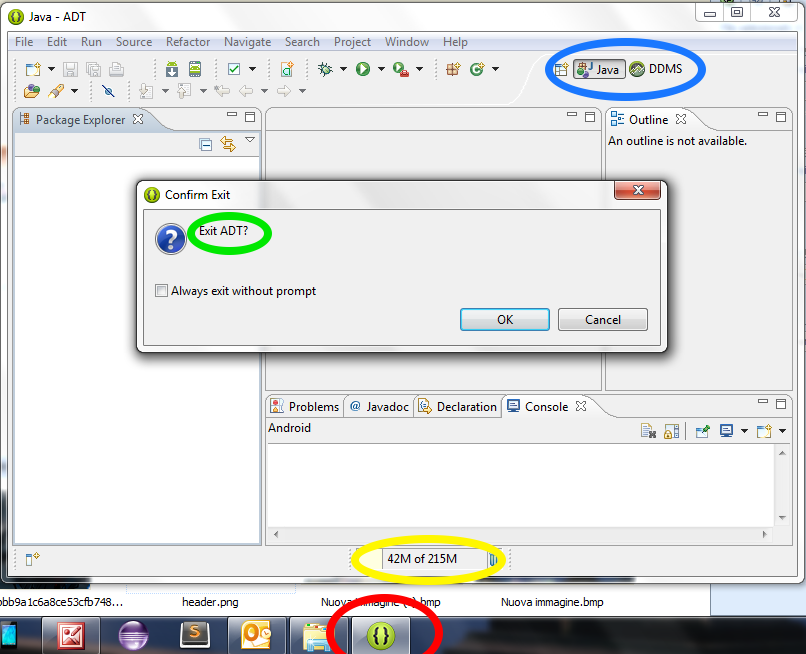
Step 4: Start ADT for first time on Ubuntu. Now after extracting ADT to the folder of your choice, go to the folder where you extracted Android ADT Bundle. In the extracted files, you will get two directories (eclipse and sdk). Navigate to eclipse directory and double-click on eclipse file to start Eclipse IDE as shown in screenshot below.
If you want to use Cordova's Android-centered shell tools inconjunction with the SDK, download Cordova fromcordova.apache.org. Otherwise ignore thissection if you plan to use the cross-platform CLI tool described inThe Command-Line Interface.
The Cordova download contains separate archives for each platform. Besure to expand the appropriate archive, android in this case, withinan empty directory. The relevant executible utilities are availablein the top-level bin directory. (Consult the README file ifnecessary for more detailed directions.)
These shell tools allow you to create, build, and run Android apps.For information on the additional command-line interface that enablesplugin features across all platforms, see Using Plugman to ManagePlugins. See Application Plugins for details on how to developplugins.
Install the Android SDK fromdeveloper.android.com/sdk. The android sdkis distributed as an 'adt-bundle-<os>-<arch>-<ver>' file.On windows, the adt-bundle is packaged with an installer.On OSX and Linux, simply unpack the 'adt-bundle' in the location you store development tools. More detailed information on Android SDK setup can be found here

For Cordova command-line tools to work, or the CLI that is based uponthem, you need to include the SDK's tools and platform-toolsdirectories in your PATH. On a Mac, you can use a text editor tocreate or modify the ~/.bash_profile file, adding a line such as thefollowing, depending on where the SDK installs:
Add the paths for java and ant if needed. This line in ~/.bash_profileexposes these tools in newly opened terminal windows. If your terminalwindow is already open in OSX, or to avoid a logout/login on Linux, runthis to make them available in the current terminal window:
To modify the PATH environment on Windows 7:
Click on the Start menu in the lower-left corner of the desktop,right-click on Computer, then select Properties.
Select Advanced System Settings in the column on the left.
In the resulting dialog box, press Environment Variables.
Select the PATH variable and press Edit.
Append the following to the
PATHbased on where you installed theSDK, for example:Save the value and close both dialog boxes.
You may also need to enable Java and Ant. Open a command prompt andtype java, and also type ant. Append to the PATH whichever ofthese fails to run:
Open a New Project in the SDK
At this point, to create a new project you can choose between thecross-platform CLI tool described in The Command-Line Interface, orthe set of Android-specific shell tools. From within a source-codedirectory, here's the CLI approach:
Here's the corresponding lower-level shell-tool approach for both Unixand Windows:
Here's how to use the SDK to modify it:
Launch the Eclipse application.
Select the New Project menu item.
Choose Android Project from Existing Code from the resultingdialog box, and press Next:
If you're using the CLI, navigate to the
hellodirectory youcreated for the project, then to theplatforms/androidsubdirectory. Alternately, if you use thecreateshell utility,simply navigate to thehellodirectory.Press Finish.

Once the Eclipse window opens, a red X may appear to indicateunresolved problems. If so, follow these additional steps:
Right-click on the project directory.
In the resulting Properties dialog, select Android from the navigation pane.
For the project build target, select the highest Android API level you have installed.
Click OK.
Select Clean from the Project menu. This should correct all the errors in the project.
Build the Project
If you are using the CLI in development, the project directory'stop-level www directory contains the source files. Run either ofthese within the project directory to rebuild the app:
If you are using the Android-specific shell tools in development,there is a different approach. Once you generate the project, thedefault app's source is available in the assets/www subdirectory.Subsequent commands are available in its cordova subdirectory.
The build command cleans project files and rebuilds the app. Here isthe syntax for both Mac and Windows. The first pair of examplesgenerate debugging information, and the second signs the apps forrelease:
Configure an Emulator
You can use either the cordova CLI utility or Cordova'sAndroid-centered shell tools to run an app in an emulator. Eitherway, the SDK must first be configured to display at least one device.To do so, use the Android SDK Manager, a Java application that runsseparately from Eclipse. There are two ways to open it:
Run
androidon the command line.From within Eclipse, press this toolbar icon:
Once open, the Android SDK Manager displays various runtime libraries:
Choose Tools → Manage AVDs (Android Virtual Devices), thenchoose any item from Device Definitions in the resulting dialogbox:
Android Adt Bundle 32 Bit Download
Press Create AVD, optionally modifying the name, then press OKto accept the changes:
The AVD then appears in the Android Virtual Devices list:
To open the emulator as a separate application, select the AVD andpress Start. It launches much as it would on the device, withadditional controls available for hardware buttons:
Deploy to Emulator
At this point you can use the cordova CLI utility to deploy theapplication to the emulator from the command line:
Otherwise use the alternate shell interface:
Instead of relying on whichever emulator is currently enabled withinthe SDK, you can refer to each by the names you supply:
Android Adt Bundle
This pushes the app to the home screen and launches it:
When you run the app, you also build it. You can append additional--debug, --release, and --nobuild flags to control how it isbuilt, or even whether a rebuild is necessary:
If instead you are working within Eclipse, right-click the project andchoose Run As → Android Application. You may be asked tospecify an AVD if none are already open.
For a faster experience, you can use the Virtual Machine Acceleration to improve the execution speed.Many modern CPUs provide extensions to execute Virtual Machines more efficiently.Before attempting to use this type of acceleration, you need to determine if your current development system's CPU, supports one the following virtualization technologies:
- Intel Virtualization Technology (VT-x, vmx) → Intel VT-x supported processor list
- AMD Virtualization (AMD-V, SVM), only supported for Linux (Since May 2006, all CPUs AMD include AMD-V, except Sempron).
Another way to find out if your Intel processor supports VT-x Technology, it's by executing the Intel Processor Identification Utility, for Windowsyou can download it from the Intel Download Center,or you can use the booteable utility, which is OS Independent.
Android Eclipse Adt Bundle Download
After install and execute the Intel Processor Identification Utility over Windows, you will get the following window, in order to check if your CPU supports the Virtualization Technologies:
In order to speed up the emulator, you need to download and install one or more Intel x86 Atom System Images, as well as the Intel Hardware Accelerated Execution Manager (HAXM).
Open your Android SDK Manager, and select the Intel x86 Atom System Image, for whichever version that you want to test. Then go to Extras and select Intel x86 Emulator Accelerator (HAXM), and install those packages:
After download, run the Intel installer, which is available within yourAndroid SDK at extras/intel/Hardware_Accelerated_Execution_Manager. Note:If you have any problems installing the package, you can find more information and step by step guidance check thisIntel Article.
Install one or more
Intel x86 AtomSystem Images as well as theIntel Hardware Accelerated Execution Manager, available underExtras.Run the Intel installer, which is available within your Android SDKat
extras/intel/Hardware_Accelerated_Execution_Manager.Create a new AVD with the target set to an Intel image.
When starting the emulator, ensure there are no error messagesindicating a failure to load HAX modules.
Deploy to Device
To push an app directly to the device, make sure USB debugging isenabled on your device as described on theAndroid Developer Site,and use a mini USB cable to plug it into your system.
You can use this CLI command to push the app to the device:
...or use this Android-centered shell interface:
With no flags specified, the run command detects a connecteddevice, or a currently running emulator if no device is found,otherwise it prompts to specify an emulator.
To run the app from within Eclipse, right-click the project and chooseRun As → Android Application.
Android Sdk Adt Bundle
Other Commands
Android Adt Bundle For Windows 64-bit
The following generates a detailed log of the app as it runs:
Download Android Sdk Adt Bundle For Windows
The following cleans the project files: